
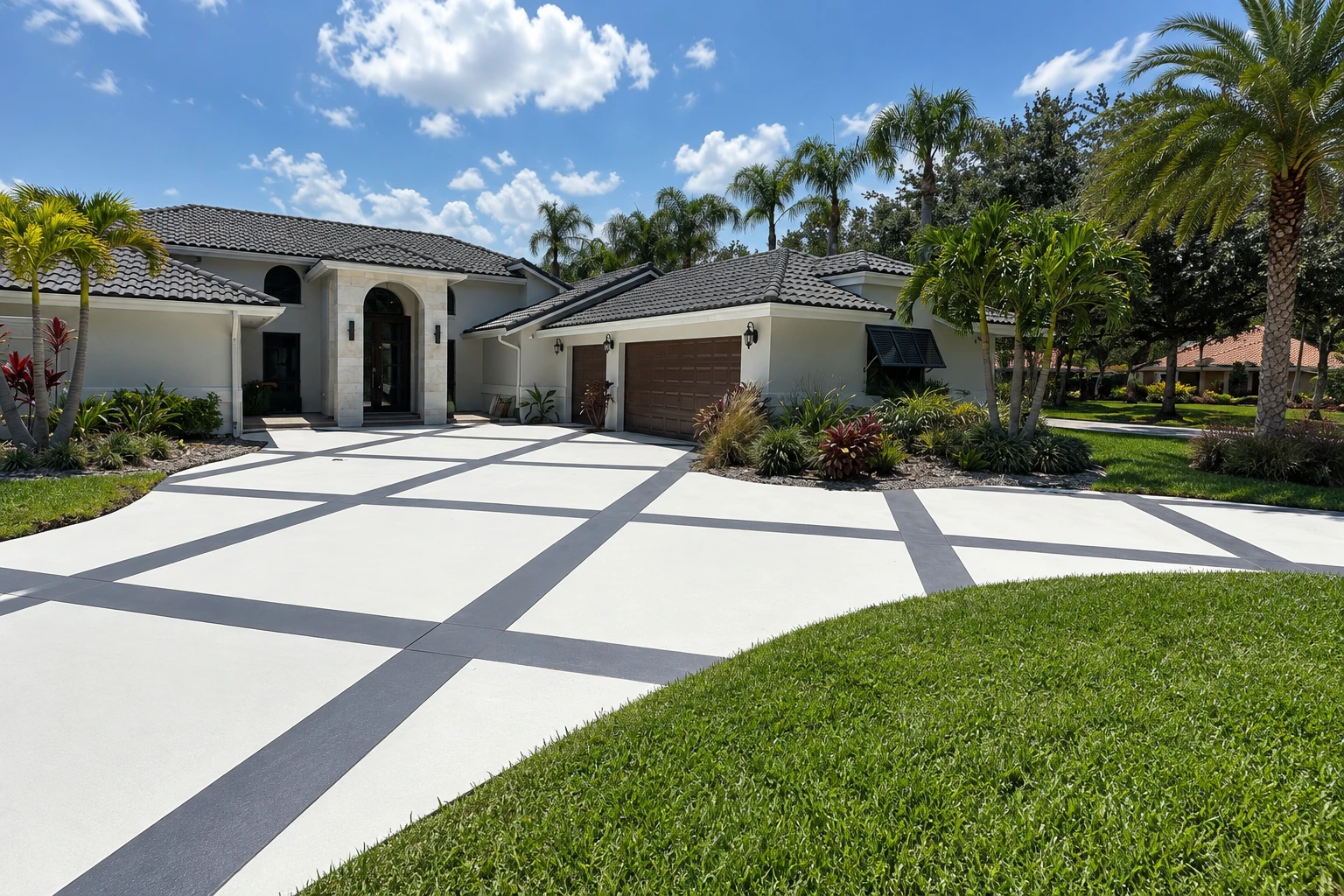
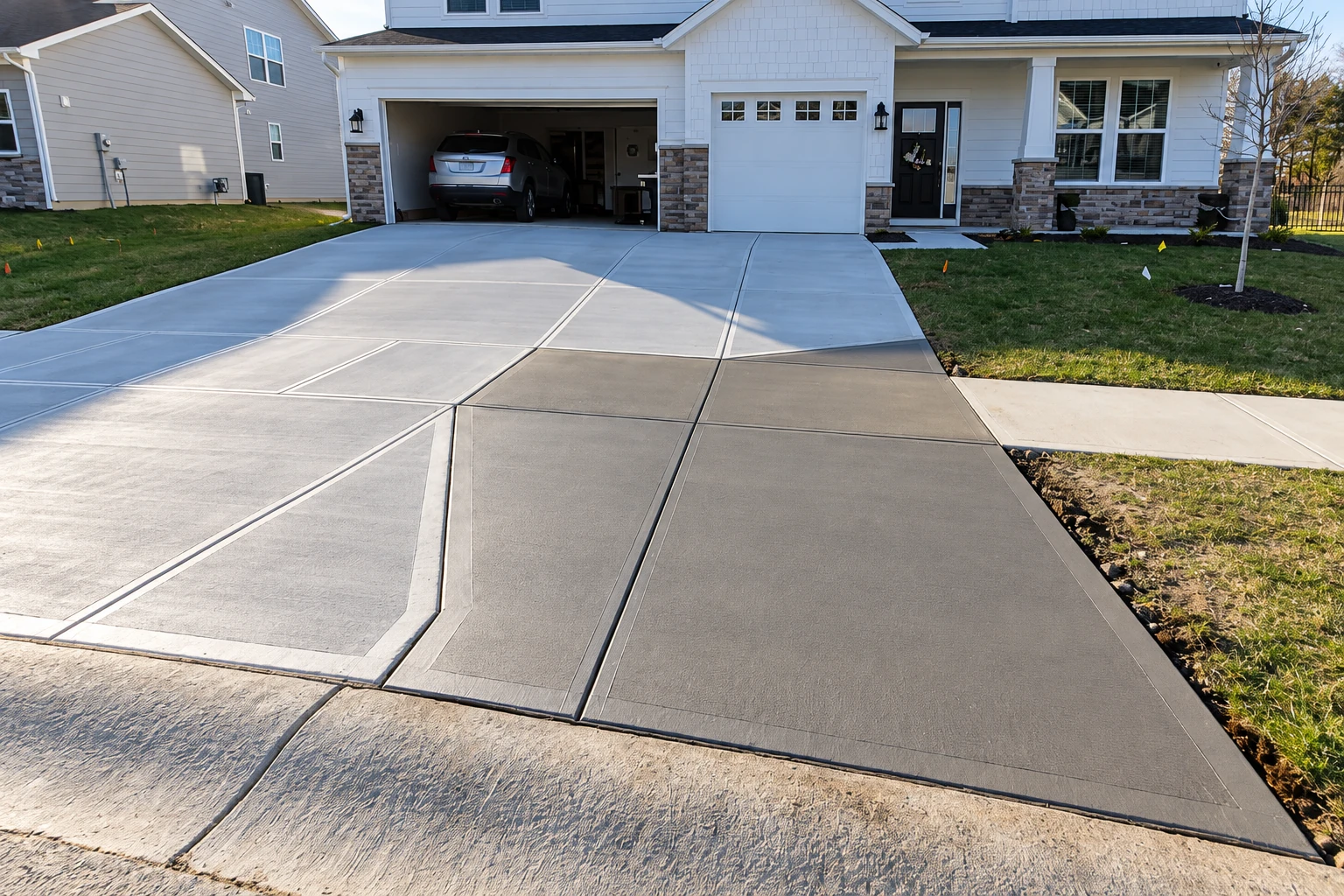
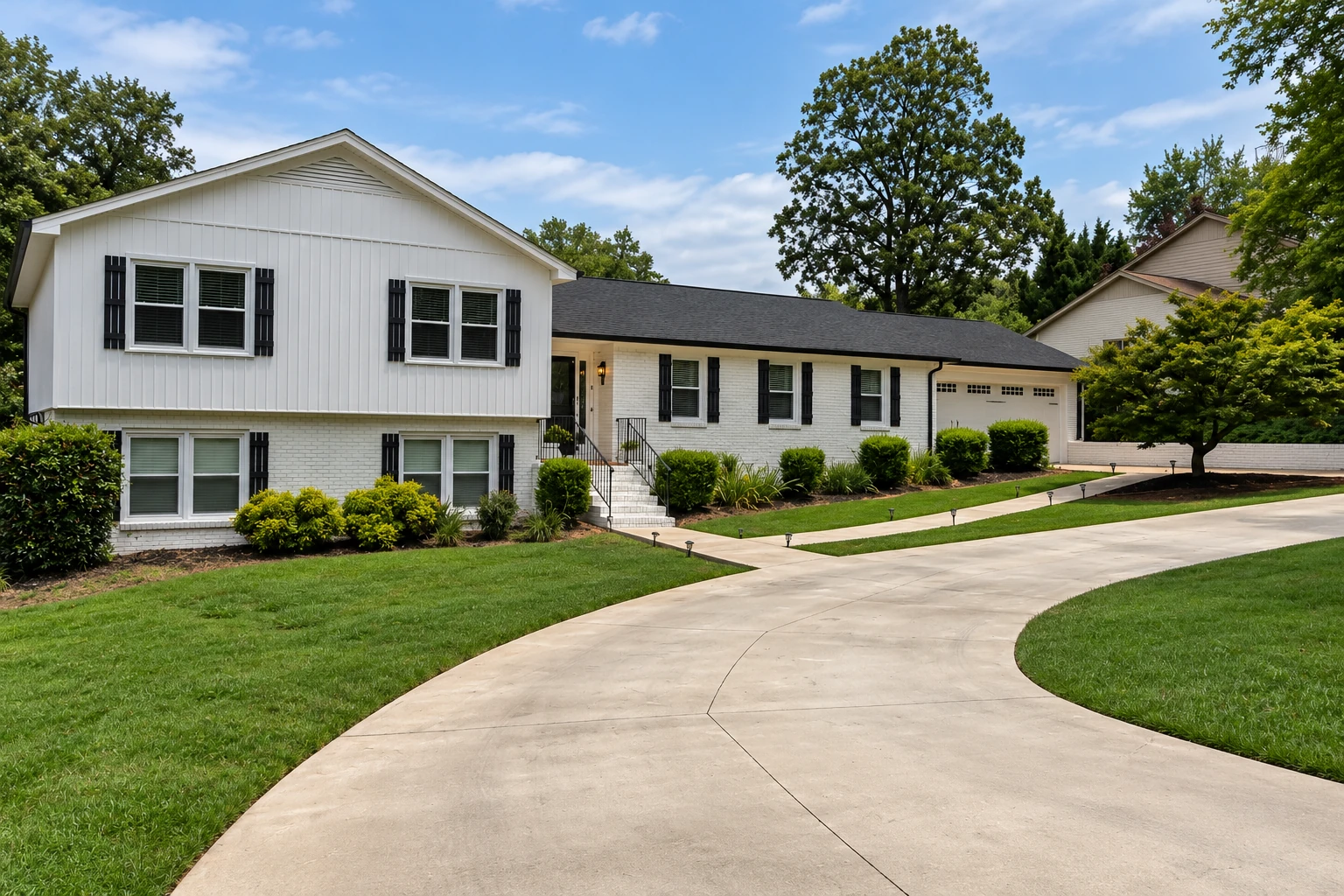
Duluth runs up the hill from the lake, and that shapes most of the concrete work we do here. We see a lot of older houses on tight, sloped lots, driveways that climb or drop hard to the street, and backyards that step down in tiers. Most of our calls are homeowners with a cracked, sinking or uneven driveway, patio or front walk, along with some small business owners who need a lot, a floor or a slab.
We do the same work across the bay in Superior, WI and just west in Hermantown, MN. On a slope, water and loose dirt both head downhill, so the ground under a Duluth slab has to be dug out, packed and graded before anything else happens.
What sets your price and your schedule
The size of the slab, how thick it needs to be, how much old concrete we tear out and how much base work the ground needs move the price most. A tight lot where the truck can't reach the forms adds labor, and a stamped or decorative surface costs more than a plain broom finish, the light texture that gives shoes and tires grip. The schedule turns on the permit side, the weather on pour day and curing, the wait while the concrete hardens before you can walk on it and a longer wait before you drive on it. I walk the site with you and follow up with a written estimate that gives you the figure for your job.
Why we spend the money under the slab
Most slabs that sink or crack early were poured on dirt that got raked level instead of dug out and packed. The subgrade, the ground the slab sits on, is the part nobody sees after day one, so it's the first thing people want to cut. I'd rather you pick a plainer finish than skimp there, because a nice surface on a soft base settles anyway. We check where the water runs so the slab falls away from the house, and we cut control joints, shallow grooves that give any crack a straight place to go. It's how we build every concrete driveway, patio and walk.
Sorting out the permit before we dig
In Duluth, building permits come from the city's Construction Services & Inspections department, which issues them for building, altering, repairing or moving a building or structure. Getting the permit is on you as the owner or on the contractor doing the work, and a contractor who pulls it has to be licensed under Minnesota's contractor licensing rules. I look into the permit side of each job up front and tell you which city office handles it. When we're the contractor doing the work, we take care of the application for you. We're licensed and fully insured, so you're not carrying that risk on your property.